
Transcriptomics
RNA Sequencing Services
Understand Gene Expression Across Cells, Tissues, and Disease Models
Admera Health’s transcriptomics services help researchers measure and interpret gene expression at scale — from bulk tissue to near single-cell resolution.
Our RNA-seq portfolio spans mRNA-seq, total RNA-seq, small RNA, miRNA-seq, metatranscriptomics, and high-throughput screening formats, backed by scalable sequencing and full-service bioinformatic analysis, from raw reads to publication-ready results.
Turnaround for Library Preparation & Sequencing
10-15 days
US Operations
100%
Working with challenging samples
>10 years
WHAT IS TRANSCRIPTOMICS
Transcriptomics is the study of the complete set of RNA transcripts the transcriptome produced by a genome under a specific condition. Unlike DNA sequencing, which shows what genes an organism has, transcriptomics shows which genes are actively expressed, at what level, and how that changes across cell types, tissues, treatments, and disease states.
What Is Transcriptomics?
Why RNA-Seq Matters
RNA sequencing captures a real-time snapshot of gene activity at the moment a sample is collected-. revealing not just which genes are on, but how they're regulated and how they respond to biological or environmental signals That makes it central to understanding disease mechanisms, evaluating drug and therapeutic response, characterizing novel isoforms and splice variants, and profiling the non-coding RNAs that regulate expression post-transcriptionally. Because expression is dynamic, RNA-seq answers questions genomic sequencing alone cannot.
Profile Coding and Non-Coding RNA
Use mRNA-seq or total RNA-seq to quantify protein-coding transcripts alongside lncRNA, tRNA, snRNA, and other regulatory RNA species.
Detect Isoforms and Splice Variants
Identify novel isoforms, alternatively spliced transcripts, and gene fusion events.
Characterize Small RNA Regulation
Use smRNA/miRNA-seq to define which small RNAs are shaping post-transcriptional gene expression.
Scale to High Throughput
Screen hundreds to thousands of conditions with DRUG-seq and BRB-seq for mechanistic and compound-response studies.
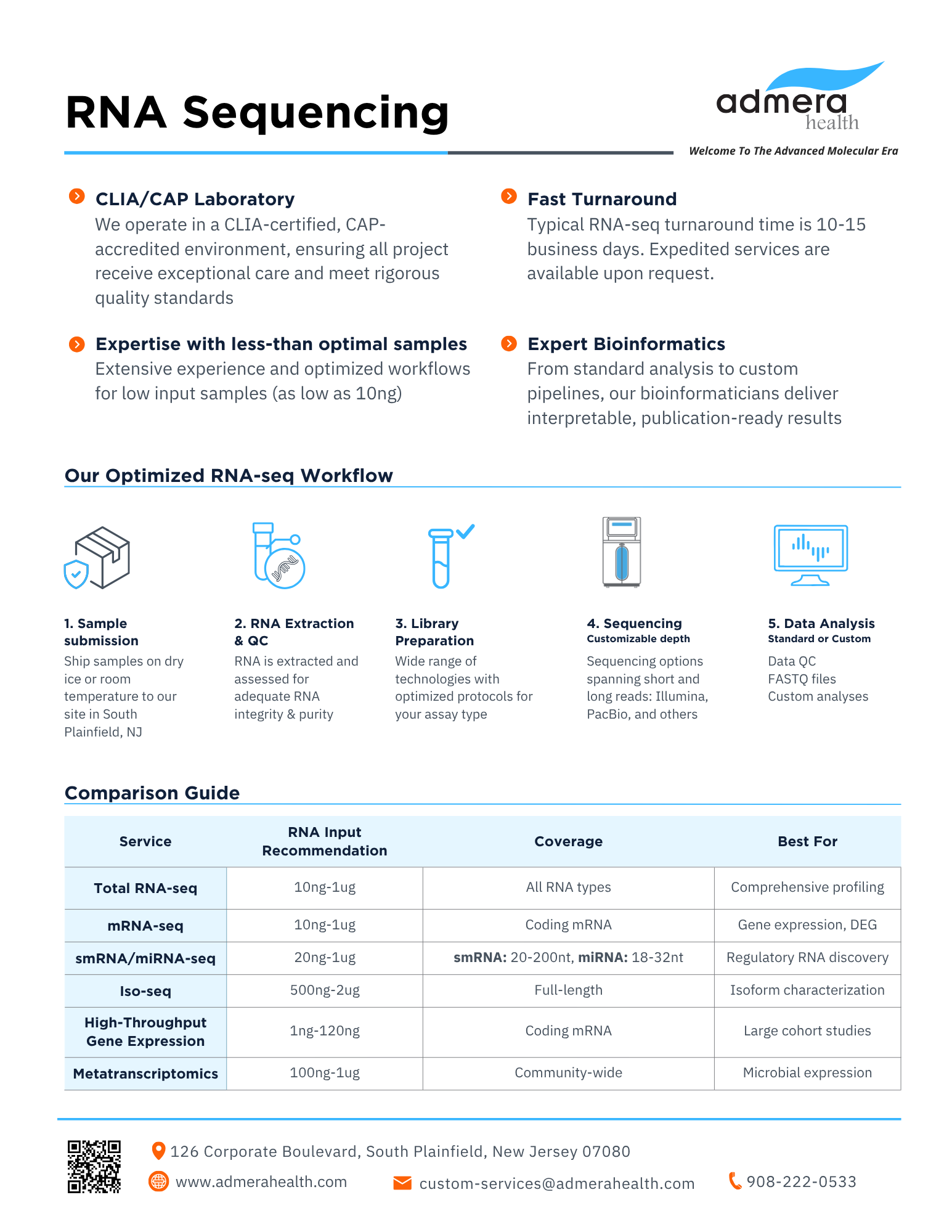
ADMERA HEALTH SERVICES OVERVIEW
Explore our Transcriptomics Services
Gene expression looks different depending on what you’re measuring the whole coding transcriptome, non-coding RNA, small regulatory RNAs, a microbial community, or thousands of compound-treated wells at once. Explore the service below that fits your study design.
High Throughput RNA-seq
OUR WORKFLOW
How a Transcriptomics Projects Works At Admera
Admera Health's transcriptomics project workflow is designed for consistency and data quality at every stage, from RNA extraction to final analysis.

1. Consultation
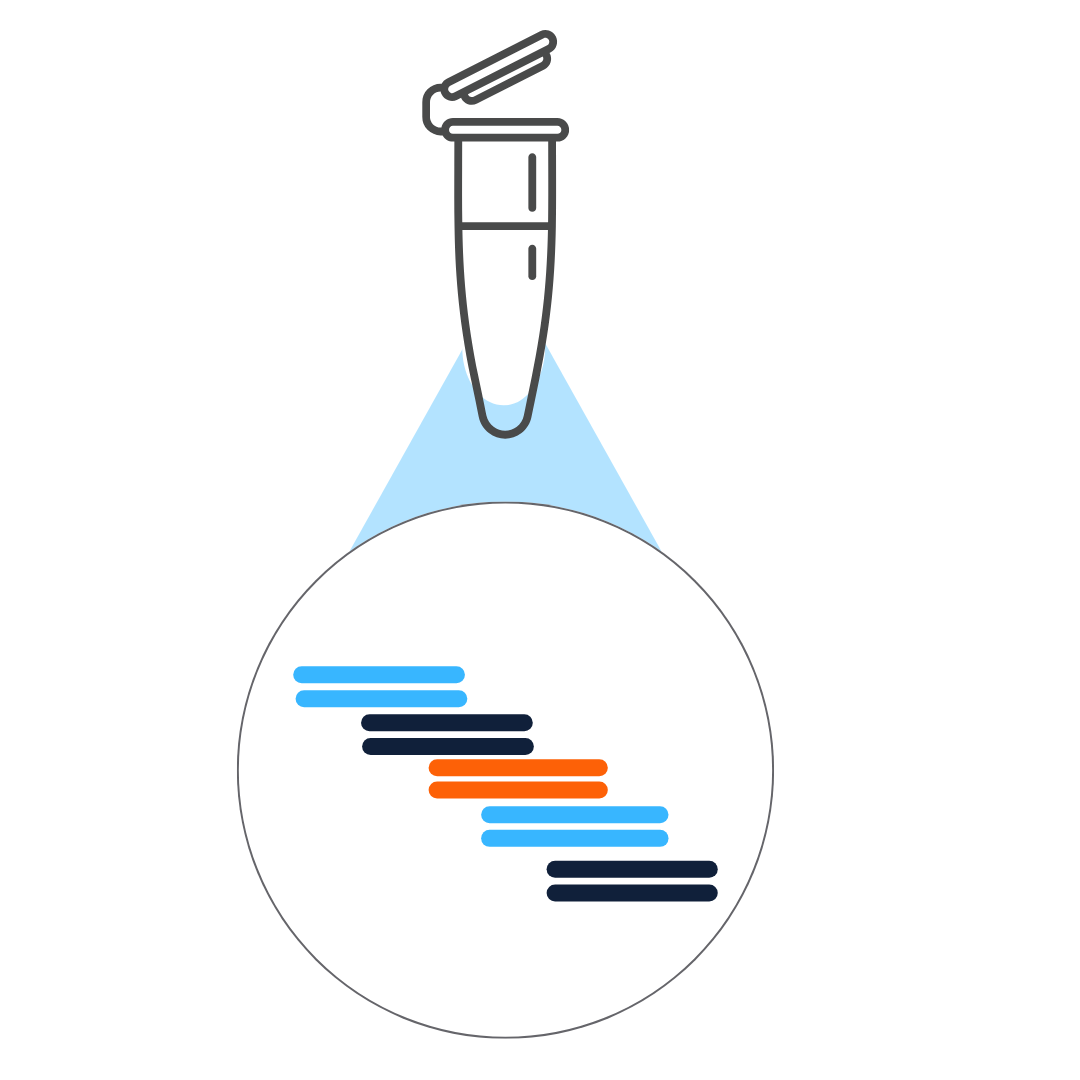
2. Sample Preparation and Submission

3. Library Preparation and Sequencing
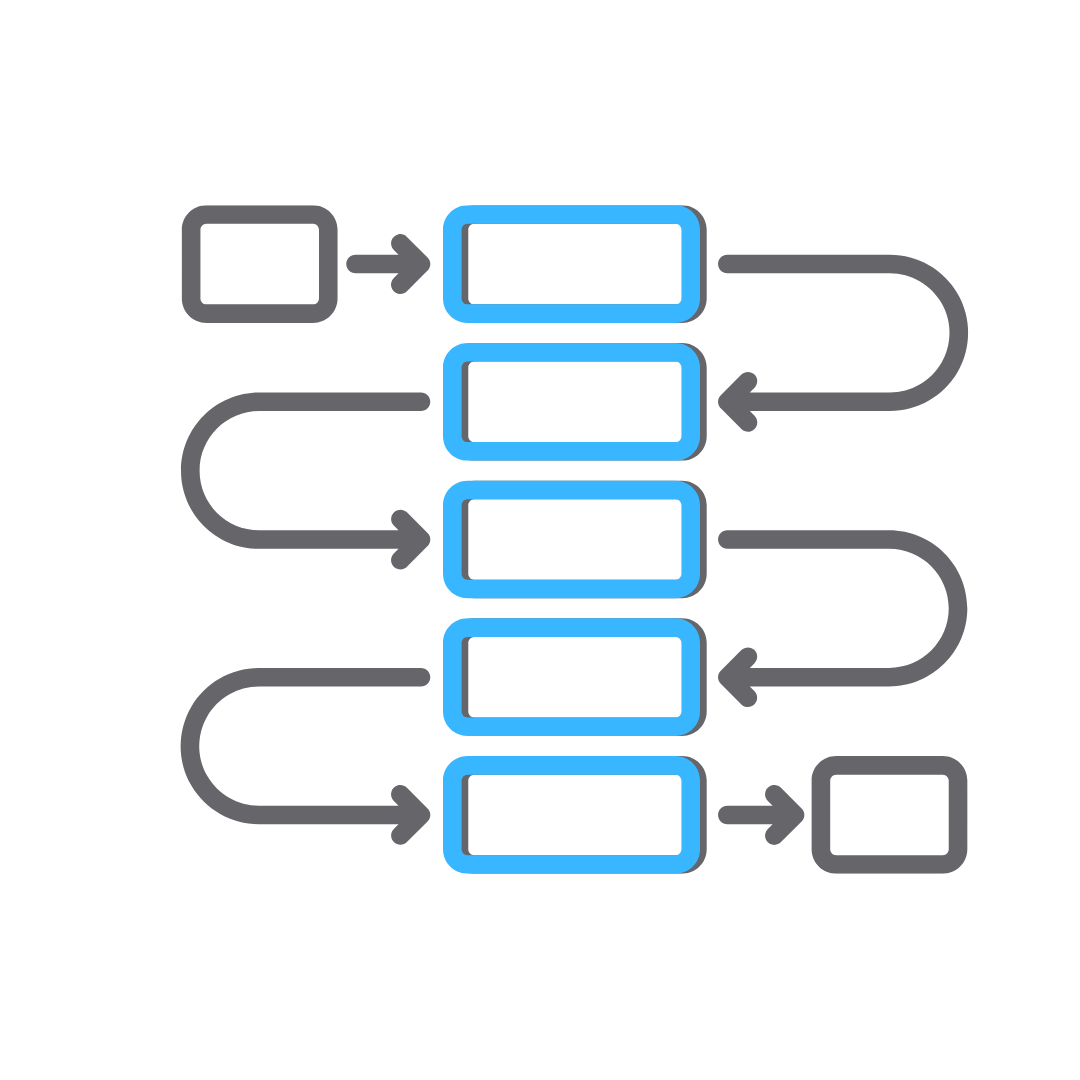
4. Bioinformatics & Data Analysis

WHO WE ARE
Why Researchers Choose Admera Health
As a CLIA/CLEP-certified and CAP-accredited genomics partner, Admera Health delivers the accuracy and reliability research programs depend on.
Trusted by researchers, backed by experts
19,000+ peer-reviewed publications supported by our team's 1:1 project guidance and PhD-level bioinformatics analysis — not just raw data, but insight you can act on.
Quality and reliability you can count on
Your project is has a 99.9% data quality pass-through rate reflects rigorous QC at every step, from sample intake to final delivery.
Deep RNA-seq and multi-omics expertise
15+ years of experience means our team has seen — and solved — the edge cases, from low-input samples to challenging tissue types.
RESOURCESRNA Comparison Guide
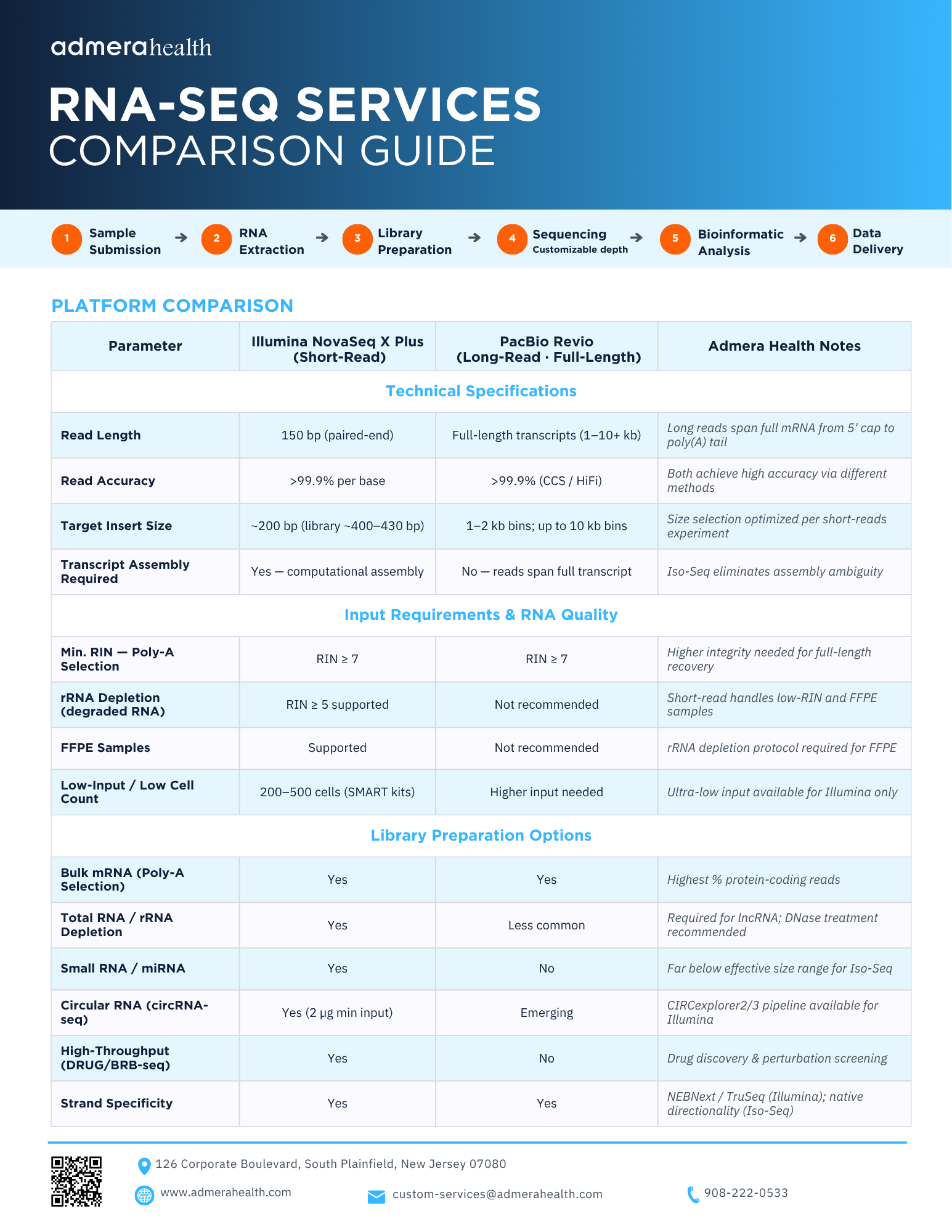
Choosing an RNA-seq platform?
Explore our short-read vs long-read comparison guide and choose the right platform for your project.
RNA Sample Submission Guide
See our RNA sample submission guideline for sample preparation, packing, and shipping instructions.

FEATURED PUBLICATIONS
Admera Health provides comprehensive support for all projects, and delivers publication-ready data. Discover how researchers are using Admera Health to advance their Transcriptomics studies.
Transcriptomics In Action
GETTING STARTED
Frequently asked questions
We offer a range of solutions designed to meet your needs—whether you're just getting started or scaling something bigger.
Everything is tailored to help you move forward with clarity and confidence.
Sample Preparation & Requirements
-
We accept a wide variety of sample types, including FFPE, fresh frozen tissue, blood, cell pellets, and purified RNA. For purified RNA, we require a minimum concentration of 50 ng/µL in a total volume of 50 µL. We recommend providing a higher input amount for low-abundance transcripts. Please submit a completed sample submission form with your shipment.
See Sample Submission Guidelines here. -
If your sample does not meet our quality control standards at any point in the workflow, we will contact you immediately. We will discuss the specific failure point and provide options, which may include re-submitting the sample, proceeding with a modified workflow, or canceling the project. We believe in transparency and working with you to achieve the best possible outcome.
-
Our workflows are designed to maximize data quality from start to finish. We use specialized protocols for challenging samples like FFPE to ensure high-quality RNA extraction. During library preparation, we use Unique Dual Indexes (UDIs) to minimize index hopping and Unique Molecular Identifiers (UMIs) to correct for PCR duplicates, ensuring accurate quantification. We also perform stringent quality control checks at every step to guarantee reliable and usable data.
-
Admera Health offers flexible input requirements, including low-input and FFPE samples, down to ultra-low input — near single-cell levels. Lab operations are CLIA-certified/CAP-accredited, and PhD-level bioinformatics support is included with every project.
Submitting Samples? Get The Guide
-
The "best" service depends on your sample type, budget, and depth needs — but look for a provider with CLIA-certified/CAP-accredited lab operations, flexible input requirements (including low-input and FFPE samples), and end-to-end support from extraction through bioinformatics. Admera Health offers exactly this: bulk RNA sequencing down to ultra-low input, near single-cell levels, PhD-level bioinformatics support, and fast turnaround (typically 10–15 business days, expedited on request) — one of the most complete RNA sequencing services for research available today.
Admera Health offers exactly this: bulk RNA-seq down to ultra-low input, near single-cell levels, PhD-level bioinformatics support, and fast turnaround (typically 10–15 business days, expedited on request).
Tissue-Specific Questions
-
Yes. We specialize in handling challenging and low-input samples, including FFPE, blood, fresh frozen tissue, and cell pellets. Our optimized workflows for FFPE samples include a high-yield extraction protocol with improved proteinase K digestion and DNase treatment to minimize DNA and rRNA contamination. This ensures a high success rate and provides the necessary input quality for robust downstream analysis.
-
Yes. In xenograft (PDX) tumor RNA-seq, sequencing captures RNA from both the implanted human tumor cells and the mouse host tissue stromal/immune microenvironment. Without deconvolution, mouse reads contaminate your human gene expression data. Admera's dedicated xenograft pipeline eliminates this problem:
Dual-genome alignment: every read is aligned independently to GRCh38 (human) and GRCm38/mm10 (mouse) using STAR.
XenofilteR deconvolution: reads are classified as human-specific or mouse-specific by comparing alignment mismatch scores; ambiguous reads are discarded, resulting in clean human-only BAM files.
Human-only quantification: HTSeq raw gene counts and StringTie FPKM/TPM values are generated from deconvoluted, human-specific reads.
Rigorous QC reporting: Picard RNA metrics + interactive MultiQC HTML dashboard delivered with every project.
What is the client impact? Without species deconvolution, a substantial fraction of aligned reads in xenograft samples can originate from mouse host tissue, severely distorting human tumor signal. Admera's pipeline delivers accurate human tumor transcriptomes — ready for differential expression analysis, pathway analysis, and publication-grade methods documentation.
-
Yes. Admera has delivered RNA-seq for non-human, non-mouse organisms across a broad range of species, including:
Schistosoma mansoni: parasitology / tropical disease vaccine research
Xenopus laevis: developmental biology and amphibian models
Atelopus zeteki (Panamanian golden frog): wildlife conservation genomics
Batrachochytrium dendrobatidis (chytrid fungus): host-pathogen interaction studies
Bos taurus (bovine): agricultural and veterinary transcriptomics
Gallus gallus (chicken): poultry disease and agricultural research
Saccharomyces cerevisiae: yeast model systems and fermentation biology
Clostridium saccharoperbutylacetonicum: microbial metabolic engineering
For species with reference genomes, Admera uses standard alignment-based pipelines. For non-model organisms without a reference, de novo transcriptome assembly (Trinity) followed by functional annotation is available. Contact Admera with your organism and study design for a project-specific recommendation.
-
Yes. Many real-world studies involve more than one experimental variable — for example, treatment condition crossed with a physiological variable such as stress, diet, age, or sex. Admera's bioinformatics team is experienced in factorial experimental design RNA-seq analysis, including:
Multi-factor DESeq2 models: Designs with two or more independent variables (e.g., treatment × condition) are modeled using interaction terms, allowing Admera to detect main effects and gene-level interactions between factors.
Complex contrast matrices: Beyond simple A-vs-B comparisons, Admera generates custom contrast sets — combined group comparisons, marginal effects, and interaction contrasts — tailored to your experimental hypothesis.
Parallel multi-tissue RNA-seq analysis:: When the same experimental design is applied across multiple tissue types or cell compartments, Admera processes and analyzes each tissue using a consistent pipeline, enabling cross-tissue comparison.
Tissue-specific and shared DEG identification: Venn diagrams and overlap analyses identify which differentially expressed genes and pathways are shared across tissues versus tissue-specific — critical for understanding systemic vs. local transcriptomic responses.
What is the client impact? Factorial experimental designs reflect how experiments are actually conducted in the lab. Forcing complex designs into simple pairwise comparisons loses statistical power and misses interaction effects. Admera designs the right statistical model for your study from the start.
-
Yes. Dual or multi-organism transcriptomics is a supported capability. In studies profiling both a host organism and an infecting pathogen, researchers need to understand not just how the host responds to infection, but also how the pathogen itself changes its gene expression. Admera handles this by running parallel, organism-specific analysis pipelines on the same set of samples:
Organism-specific alignment and quantification: Reads from each sample are aligned to the host organism reference genome and the infecting pathogen reference genome independently, with species-specific gene counts and expression profiles generated for each.
Host immune response profiling: Differential expression, GO, and KEGG enrichment analysis reveals which host immune, metabolic, and stress-response pathways are activated or suppressed during infection.
Pathogen transcriptome analysis: The pathogen's own gene expression profile is characterized simultaneously, identifying virulence-associated, metabolic, or adaptive genes differentially expressed during active infection vs. control conditions.
Non-model and non-annotated organisms: For host or pathogen species with limited genome annotation, Admera applies de novo assembly or uses best-available reference genomes with custom annotation pipelines.
Conservation and wildlife genomics: This approach has been applied to endangered and non-standard wildlife species, informing conservation and disease management strategies.
What is the client impact? Host organism–infecting pathogen dual transcriptomics requires coordinating multiple reference genomes, handling ambiguous multi-mapping reads, and interpreting results across two entirely different organisms. Admera's team manages this end-to-end, delivering separate, clearly organized results for host and pathogen alongside a unified interpretation
-
Yes. Admera Health supports BRB-seq (Bulk RNA Barcoding and sequencing) and equivalent high-throughput barcoded bulk RNA-seq protocols (including DRUG-seq and other plate-based multiplexing protocols). These methods use unique sample barcodes and UMIs to pool tens to hundreds of samples into a single sequencing run — dramatically reducing per-sample cost while maintaining full-transcriptome coverage. Admera's end-to-end BRB-seq workflow covers:
Barcode-aware alignment with STARsolo: demultiplexes pooled samples, assigns reads to individual samples via a barcode whitelist, and generates UMI-collapsed gene count matrices in a single pass.
UMI-based deduplication: PCR duplicates are collapsed using UMI information (1-mismatch directional correction), giving more accurate quantification than standard read-count-based RNA-seq.
High-throughput dose-response and compound screening: ideal for experiments where many conditions — multiple drug concentrations, compound panels, or perturbation libraries — need to be profiled simultaneously.
Custom targeted gene panel analysis: expression of a curated gene panel can be extracted and summarized across all samples alongside the full differential expression output.
Full downstream analysis pipeline: BRB-seq count matrices feed directly into Admera's standard bulk RNA-seq downstream pipeline.
Cost efficiency at scale: by pooling many samples into one flow cell lane, BRB-seq and equivalent protocols can reduce per-sample sequencing cost by 5–10× compared to individually indexed standard libraries.
What is the client impact? BRB-seq is particularly well-suited for drug discovery, compound screening, and perturbation studies where transcriptomic profiling of many conditions is required but budget or throughput is a constraint.
Platform Selection
-
Our standard turnaround time is typically 10-15 business days, though this can vary depending on the sample type, project complexity, and required sequencing depth. Expedited services are available upon request. Please contact us for a detailed quote and timeline specific to your project.
-
Yes. Rush processing is available for an additional fee. Contact us as early as possible.
Turnaround Time
Bioinformatic Analysis
-
Our bioinformatics pipelines are comprehensive and customizable. For Bulk RNA-seq, we provide trimming and QC, mapping, counting, normalization, and differential expression analysis (DE). For projects involving non-model organisms, we offer de novo transcriptome assembly. Additional analysis options include alternative splicing detection, gene fusion analysis, and functional enrichment analysis (MA-plot, PCA, heatmaps, volcano plots, and GO enrichment).
-
A standard mRNA-seq workflow moves from RNA extraction and QC, to poly-A selection or rRNA depletion, library prep, sequencing, and bioinformatics analysis.
On the analysis side, Admera Health provides trimming and QC, alignment, transcript counting, normalization, and differential expression (DE) analysis, PCA, volcano plots, heatmaps, functional enrichment (GO/KEGG), plus optional add-ons like alternative splicing detection and gene fusion analysis. For non-model organisms without a reference genome, de novo transcriptome assembly is also available.
-
Admera's bioinformatics pipeline for RNA-seq covers the full path from raw reads to biological insight: quality trimming, alignment/mapping, quantification, normalization, DE analysis, pathway/GO enrichment. Depending on project goals, this can extend to isoform-level analysis, splice variant detection, gene fusion calling, alternative splicing detection, and other custom analysis — all delivered as publication-ready reports.
-
Yes. This is a clinical-grade strength. Admera's bioinformatics team supports multi-arm clinical trials comparing multiple dose cohorts across longitudinal timepoints, with parallel arms across geographically or demographically distinct sample groups. Key capabilities:
Flexible DESeq2 designs: Per-timepoint and per-dose-group pairwise comparisons across any combination of groups and visit days.
Cross-population batch correction: ComBat or limma-based correction when samples span geographically or demographically distinct cohorts.
Publication-grade statistics: DEGs filtered by FDR-adjusted p-value (BH padj < 0.05) and log2FC thresholds.
Full GO/KEGG enrichment: clusterProfiler-based GO (BP, CC, MF) and KEGG enrichment — separately for up-regulated, down-regulated, and all DEGs.
Immunogenomics add-ons: immunoglobulin gene expression heatmaps (IgG, IgA, IgE, IgM) per dose group and timepoint, critical for vaccine immunogenomics studies
What is the client impact? Admera's PhD bioinformaticians design the full statistical framework for your study — including cross-population comparisons across longitudinal timepoints — and produce manuscript-ready figures and methods sections supporting submissions to Nature Communications, PLOS Pathogens, and similar peer-reviewed journals.
-
Absolutely. Admera Health has executed multi-compound, time-course RNA-seq studies designed to characterize antibody and small-molecule drug mechanisms of action (MOA):
Compound comparison panels: Parallel RNA-seq profiling of multiple test compounds at defined timepoints vs. appropriate controls.
Compound signature analysis: Identifies transcriptomic signatures that stratify compounds by functional phenotype.
Variant vs. reference compound analysis: Characterizes how structural or formulation modifications alter gene expression relative to reference compounds.
Predictive classification support: Signature gene sets derived from known compounds can predict the functional phenotype of new, untested molecules.
Rich visualization: Volcano plots, heatmaps, PCA clustering, and Venn diagrams across all compound-comparison pairs.
What is the client impact? For biopharma and biotech clients, Admera's transcriptomic MOA analysis enables lead compound ranking, safety signal detection, and mechanistic differentiation — without requiring in-house bioinformatics infrastructure.
-
Bioinformatics reproducibility and pipeline quality are technical and compliance requirements, not marketing claims:
Snakemake + conda environments: All RNA-seq projects run through a Snakemake-based pipeline with conda environment version pinning.
Automated vs. manual benchmarking: Admera routinely validates automated pipeline outputs against manually curated analyses before any workflow is deployed to client projects.
Interactive QC dashboards: every project receives a MultiQC HTML report aggregating FastQC, STAR alignment, Picard RNA metrics, and HTSeq/StringTie statistics.
Documented methods for publication: Reference genome versions, tool versions, and comparison definitions are documented in manuscript-formatted Methods sections.
Secure data handling: All sequencing data and analysis outputs are stored in a compliant AWS environment; client data is never processed or stored outside approved infrastructure.
What is the client impact? In regulated research contexts — clinical trials, grant applications, regulatory submissions — Admera's documented, version-controlled workflows deliver the reproducibility and pipeline quality expected by institutional compliance teams, grant reviewers, and journal peer reviewers.
-
Admera's standard RNA-seq deliverable package includes:
Raw and trimmed FASTQ files: available via secure AWS S3 or SFTP transfer.
Gene count matrix: HTSeq raw counts per sample — ready for DESeq2 or edgeR.
Transcript abundance tables: StringTie FPKM/TPM values for visualization and isoform-level analysis.
Differential expression results: significant DEGs with FDR-adjusted p-values, log2FC, and gene annotations (CSV format).
GO/KEGG enrichment reports: tables and publication-ready figures for up- and down-regulated gene sets.
Interactive MultiQC QC report: per-sample QC metrics — alignment rates, gene body coverage, rRNA contamination, read distribution.
Publication-ready figures: volcano plots, heatmaps, PCA plots, Venn diagrams (PDF + PNG).
Manuscript Methods text: formatted methods section with all software versions and parameters.
PhD bioinformatician consultation: review of results and interpretation support included.
Other Services That Might Be of Interest