

Metagenomics
Explore microbial diversity and function with 16s, ITS, and shotgun metagenomics
Typical turnaround for library preparation & sequencing
2-3 week
All sequencing and analysis on US soil critical for clinical and IP-sensitive projects.
US Operations
1:1 Support
End-to-end expert scientist support
What is Metagenomics and what is it used for?
Metagenomics, or shotgun metagenomic sequencing, is the comprehensive analysis of genetic material extracted directly from environmental samples. This field, also referred to as environmental genomics, ecogenomics, or community genomics, encompasses the characterization of complex microbial communities, enabling taxonomic profiling, functional potential assessment, and insights into ecological interactions without the need for prior cultivation. While traditional microbiology and microbial genome sequencing and genomics rely upon cultivated clonal cultures, early environmental gene sequencing cloned specific genes (often 16s rRNA gene) to produce a profile of diversity in a natural samples.
Metagenomic sequencing methods reveal the previously hidden diversity of microscopic life and offers a powerful lens for viewing the microbial world that has the potential to revolutionize understanding of the entire living world. As the cost of DNA Sequencing continues to fall, metagenomics now allows microbial ecology to be investigated at a much greater scale and detail than ever.
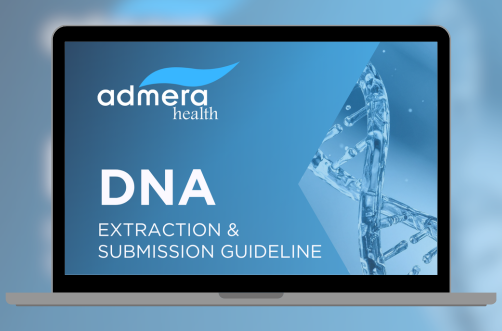
DNA Submission Guidelines
An essential guideline for submitting samples.
DNA quality directly impacts your metagenomics results. Follow our extraction, quantification, and shipment guidelines to ensure high-quality input and publication-ready data.
Metagenomics solutions at Admera
Shotgun Metagenome sequencing
Whole-community sequencing that captures bacteria, viruses, fungi, archaea, and functional genes in one workflow. Commonly used in pathogen discovery, AMR gene detection, viral metagenomics, metabolic, and functional profiling for species/strain-level resolution.
16s rRNA gene sequencing
Targeted, cost-effective bacterial community profiling using variable regions of the 16S rRNA gene to analyze bacteria in human, plant, animal, and the environmental microbiome.
ITS 1 ITS 2 sequencing
Targeted sequencing of internal transcribed spacer regions for fungal community characterization. Commonly used for mycobiome studies, fungal ecology, and fungal detection.
Amplicon-sequencing
Amplicon-seq for metagenomics-based studies uses targeted gene regions to profile microbial diversity and taxonomy across human, plant, animal, and environmental samples.
Why Researchers Choose Admera
2-3 week TAT with expedited options & consistent track record of early delivery.
Fast turnaround time

All sequencing and analysis on US soil critical for clinical and IP-sensitive projects.
US Operations

Deep Multiomics Expertise
Deep expertise in shotgun metagenomics, 16S rRNA, and ITS sequencing.

A dedicated scientist manages your project end-to-end from library prep to bioinformatic analysis.
Dedicated 1:1 support

What to expect with Admera
Standard Deliverables
Raw data as FASTQ files
Quality control report
Taxonomic profiling (Kraken2)
Functional annotation summary
Available upon request
Alpha & beta diversity analysis
AMR & virulence gene profiling
De novo assembly & MAG binning
Metabolic pathway analysis
Applications of Metagenomic Sequencing

Microbiome & taxonomic profiling
Characterize microbial communities and classify organisms in humans, animals, plants, or the environment to understand health, disease, and ecosystem dynamics
Pathogen detection
& surveillance
Identify and monitor bacteria, viruses, and other microorganisms in clinical, food, or environmental samples - enabling rapid detection of infectious agents

Antibiotic resistance & functional gene analysis
Detect resistance genes and other functional genetic elements in microbial populations, supporting research on antimicrobial resistance and novel therapeutic targets

Environmental &
industrial applications
Assess microbial diversity in soil, water, or industrial bioreactors to optimize processes, study ecological impact, or discover new enzymes and bioactive compounds
Frequently Asked Questions
Sending samples?
See our DNA sample submission guidelines for best practices on sample preparation, packaging, and shipment for the highest quality results.
Understanding metagenomics
-
Both are powerful sequencing services for studying the microbial community, but they differ in scope. Amplicon sequencing (such as 16S rRNA gene sequencing) targets a specific marker gene to profile bacteria, archaea, or fungi making it cost-effective for community-level microbiome analysis. Shotgun metagenomic sequencing sequences all genetic material in an environmental sample, providing functional profiles, antibiotic resistance genes, and strain-level resolution beyond what amplicon approaches can offer. We offer both through our CAP/CLIA-accredited next generation sequencing platform.
-
Metagenomics is the study of genetic material recovered directly from environmental samples or biological specimens without the need to culture individual organisms. Unlike traditional sequencing that targets a single organism, metagenomics captures the full diversity of bacteria, viruses, archaea, and fungi present in a microbial community. This makes it especially powerful for human microbiome research, environmental monitoring, and antibiotic resistance surveillance.
Sample & sequencing recommendations/requirements
-
We support a wide range of sample types, including:
Stool, saliva, sputum, swabs
Blood (cfDNA), tissue (FF/FFPE)
Soil, water, environmental swabs
Food, fermentation, agricultural samples
DNA extraction can be performed at your facility or by our team. For best results, please review our DNA sample submission guidelines covering sample preparation, packaging, and shipment of genetic material to ensure the highest quality data.
-
We support a wide range of primer sets to align with your study goals.
16S rRNA: V1–V9, V3, V4, V5, and custom primer designs.
ITS: ITS1 and ITS2 for fungal community profiling.
Custom primer sets can be validated upon request.
Our scientists can help you choose the best region for your microbial community and study goals whether you're profiling the human microbiome or complex environmental samples.
-
For 16S rRNA gene sequencing projects, we recommend submitting high-quality extracted DNA with sufficient concentration and purity. Read lengths and sequencing depth are tailored to your project. Our team will advise on the right parameters for detecting bacteria, archaea, and low-abundance taxa in your microbial community. Expedited processing is available with turnaround in as few as 10–15 business days.
-
Shotgun metagenomic sequencing requires higher input quantities than amplicon sequencing due to the complexity of profiling all genetic material in a sample. We recommend a minimum of 100 ng of high-quality extracted DNA (Qubit quantified, A260/A280 ≥1.8) from your environmental sample or clinical specimen. Read lengths of 150 bp paired-end are standard, with sequencing depth customized based on microbial community complexity and study goals typically 10 to 30M reads for human microbiome projects and higher for low-biomass or diverse environmental samples. Our team will guide you through DNA extraction best practices and library prep requirements during project setup.
-
We offer a range of read lengths optimized for your project goals. Shorter reads are well-suited for high-depth next generation sequencing of complex microbial communities like the human microbiome, while longer reads improve strain-level resolution and assembly of novel genomes from environmental samples. Our scientists will recommend the optimal configuration for your study.
Analysis, deliverables & turnaround
-
Our standard turnaround for metagenomics services is 10–25 business days depending on the service. Amplicon sequencing is typically faster, while shotgun metagenomic sequencing projects may take longer due to the volume of genetic material and depth of bioinformatic analysis required. Expedited options are available with a consistent track record of early delivery.
-
Yes! Our end-to-end bioinformatic analysis takes you from raw FASTQ files to publication-ready results. This includes microbiome analysis (alpha/beta diversity, taxonomic charts), functional profiles, antibiotic resistance gene detection, and shotgun metagenomics analysis for strain-level classification. A dedicated scientist works with you through the entire process, from experimental design to data interpretation. We also build custom metagenomics pipelines tailored to your study.
-
You'll receive raw FASTQ files, quality reports, and end-to-end bioinformatic analysis outputs including diversity metrics, taxonomic charts, and custom pipelines. For shotgun metagenomics, deliverables extend to functional profiles, antibiotic resistance gene annotations, and strain-level classification of bacteria, viruses, and other microorganisms in your sample. All data stays on US soil in our CAP/CLIA-accredited environment.
-
Yes. Our shotgun metagenomic sequencing services are conducted entirely within the US - all sequencing, analysis, and data storage remain on US soil, making us a trusted partner for clinical translation, grant reporting, and IP-sensitive projects. Our CAP/CLIA-accredited environment meets the standards required for publication and regulatory submissions.
Get the Most out of Your Study
Maximize your project’s potential with advanced analysis solutions. Our team of expert bioinformaticians curate pipelines tailored to your project’s experimental design.
See Metagenomics in Action
Admera Health provides comprehensive support for all projects, and delivers publication-ready data. Discover how researchers are using Admera Health to advance their environmental studies.